Endgame Checklist: Essential Winning Techniques Every Player Should Know
Most club games are not decided by a brilliant opening novelty. They are decided when one player reaches a slightly better ending and knows what to do with it. The other player drifts, swaps the wrong pieces, or lets a passed pawn die. Endgame skill is built from a small number of repeatable habits. Use this checklist before and during every endgame, and your results will improve faster than another memorised opening line. The good news is that most endgame mistakes are not deep calculation errors; they are simple failures of technique that can be trained.
In the middlegame your king hides behind pawns. In the endgame it becomes a fighting piece. A king on e4 or d4 can attack pawns, support its own, and escort a passer to promotion. A king on e1 or e8 usually watches the game slip away. When you enter an ending, ask: where is the best square for my king? Then start walking. Even two or three moves of king activity often decide a rook ending.
In king and pawn endings, the king is the main character. Calculate king races precisely: if your king can capture his pawns and return to stop yours, the pawn count may be irrelevant. Do not push pawns while your king stays passive. Use the king to win space first, then bring the pawns. A useful exercise is to play out a simple king and pawn ending against a friend or computer. Notice how often the winning plan begins with a king move, not a pawn move.
Opposition is not a mysterious trick. It is a way of using the kings’ inability to stand next to each other. Put the kings on the same file or rank with one square between them. The player who has just moved—and therefore does not have to move again—holds the opposition. If it is your opponent’s turn, you hold the opposition and their king must give way.
Distant opposition is the same idea with three or five squares between the kings. Use it to gain time when you cannot take direct opposition immediately. In king and pawn endings, count the squares and ask who must move first. If you can win the opposition, your king reaches the key squares in front of the pawn; if you cannot, the defender may hold. To train this, set up a lone king and pawn versus king. Ask who has the opposition before every move. If you can step to a key square and force the enemy king to retreat, you are converting. If you cannot, look for a waiting move with a pawn or a different route.
For a pawn on the fifth rank, the key squares are usually the three squares two ranks ahead. If your king reaches one of them, the pawn promotes. Learn the basic patterns: king in front of the pawn, rook pawn draws, outside passed pawn wins. Do not memorise every tablebase position; understand the idea of controlling the queening square.
In king and pawn endings, the player who controls the queening square usually controls the result.
Passed pawns are the endgame’s most reliable winners, but only if you treat them as a team with your king and rook. A lone pawn running forward is easy to stop. A passed pawn supported by an active king and a rook behind it creates problems the defender cannot solve. When you have a passed pawn, place your rook behind it. From behind, the rook gains freedom and pushes the pawn forward. In front, it becomes a passive blocker.
Two connected passers are often decisive. Push the one that is less advanced first, because it is easier to defend and forces the enemy king to choose a direction. Then the other pawn runs. In queen endings, keep checking until the king finds shelter, but avoid allowing perpetual check. If you are defending, blockade the pawn with a knight if possible, or put your rook in front and keep your king close.
Endgames are not only about promotion. Many winning positions end with mate, and knowing the standard patterns saves time and avoids stalemate. You should be able to deliver checkmate with king and queen, king and rook, and two bishops. You should also recognise back-rank mate, smothered mate, and the mating net with a rook on the seventh rank. When you have a material advantage, the fastest win is often to force a simple mate rather than chase extra pawns.
Practise these patterns until they are automatic. For king and queen, learn the knight’s move method: keep the queen a knight’s move away from the enemy king, drive it to the edge, and deliver mate. For king and rook, learn the waiting moves that force the king to the edge. For two bishops, learn to build a wall and push the king back one rank at a time. These are not just theoretical exercises; they appear in real games when a promotion is stopped but the mate remains.
Also respect stalemate. When the enemy king is cornered and has no legal moves, do not give away the win by a careless queen check. Give your king a square, or make a waiting move with a pawn. A single moment of carelessness can turn a full point into a half point.
Rook endings are the most common endgames in practice, and two positions decide a huge number of games: the Lucena and the Philidor. In the Lucena position, you have a rook and pawn versus rook, and your king is in front of the pawn near the promotion square. The winning method is to build a bridge with the rook: put your rook on the fourth rank, move your king out, and use the rook to block checks. It sounds easy, but only if you have practised the concrete moves.
In the Philidor position, you are defending rook and pawn versus rook. Your king is in front of the pawn, and your rook is on the third rank. When the enemy king advances, you check from behind. If the pawn advances, you drop the rook to the first rank and check from behind. The defender must stay patient: do not abandon the third-rank barrier too early, and do not let the enemy king escape to the side.
Even if you do not remember every move, remember the goals: keep your rook active, keep your king in front of the pawn when defending, and make the enemy king the target when attacking.
Before you make a move in an endgame, run through a short checklist. It takes seconds and prevents most blunders.
Use the checklist especially when you are tired. Endgames are where concentration pays the biggest dividend. A player who checks king activity, pawn structure, and rook placement every few moves will beat a player who only calculates one move ahead.
You do not need to study endgames for hours. Fifteen focused minutes a day is enough. Start with king and pawn endings, then rook endings, then basic mates. Play them out against a friend or a computer from a set position. When you make a mistake, reset and find the correct plan. The goal is not to memorise tablebase results but to recognise the same ideas in your own games: opposition, key squares, the bridge, the third-rank defence, and the active king.
Finally, apply this checklist in your next tournament game. When the queens come off, do not relax. That is the moment the game often begins. Activate your king, improve your worst piece, create a passed pawn, and give your opponent problems. Do that consistently, and you will win endings that used to slip away.
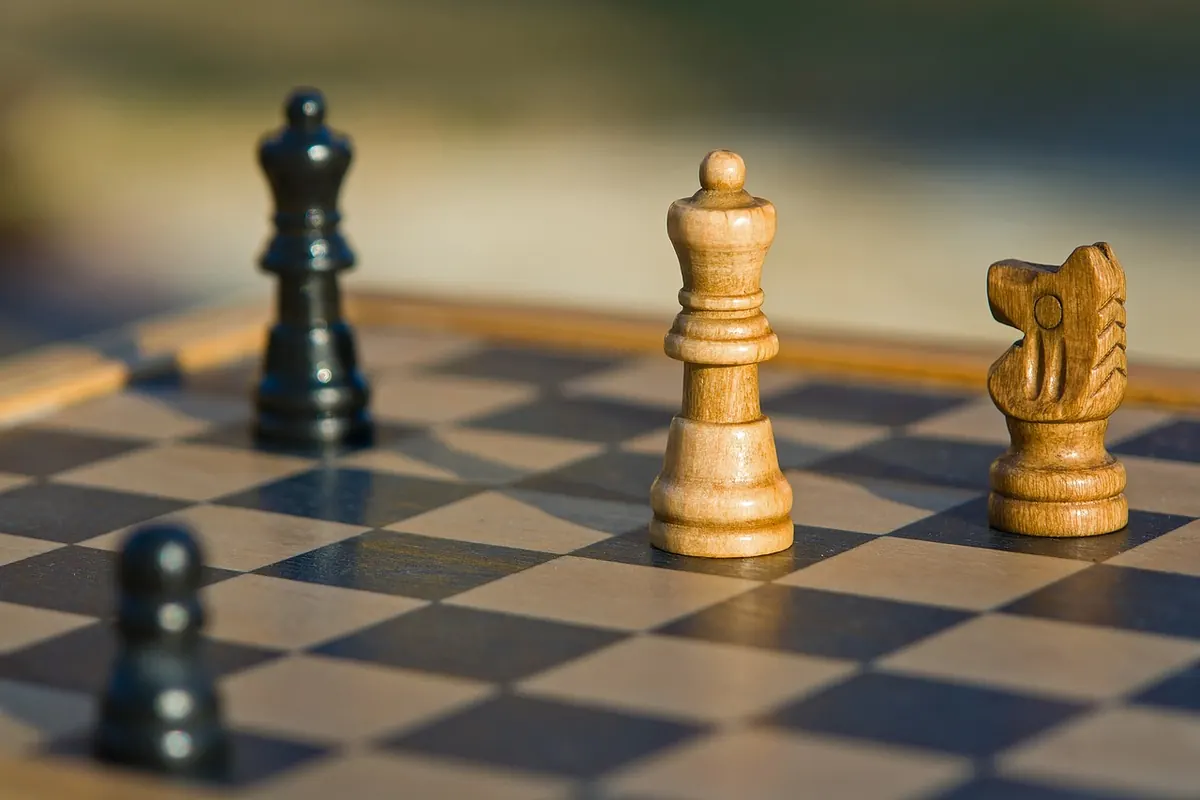
Photo: ha11ok / Pixabay